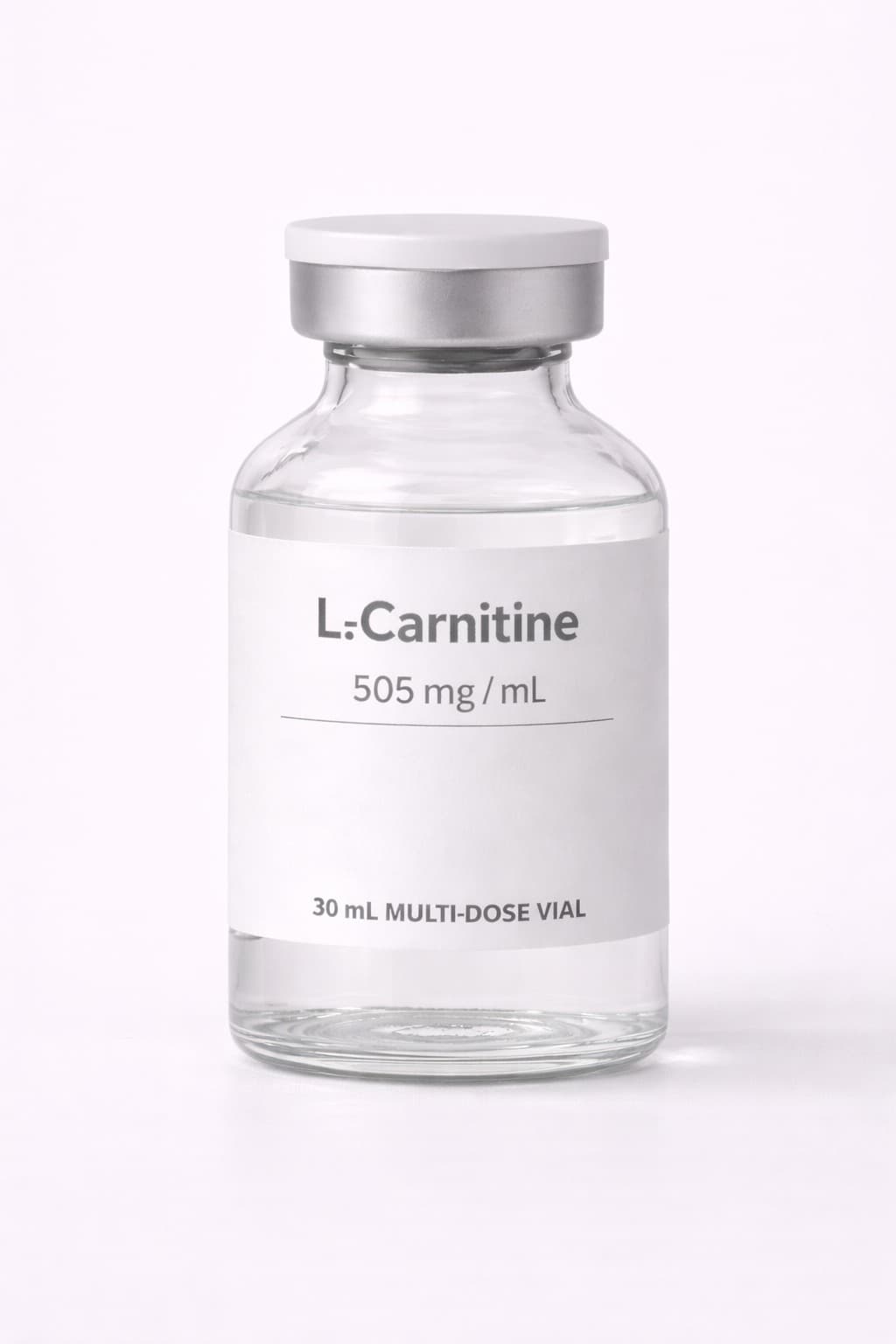


L-Carnitine Injection is an amino acid–derived compound formulated to support fat metabolism, energy production, and overall metabolic efficiency. L-Carnitine plays a critical role in transporting long-chain fatty acids into the mitochondria, where they are converted into usable cellular energy. This injectable formulation provides enhanced bioavailability compared to oral supplementation, making it an effective option for individuals seeking metabolic support, improved energy utilization, and optimized physical performance. L-Carnitine injections are commonly incorporated into weight management, fitness, and wellness protocols to support fat utilization and endurance. Mechanism of Action: L-Carnitine: Facilitates transport of fatty acids into mitochondria for beta-oxidation Supports efficient fat metabolism and energy production Helps reduce accumulation of metabolic byproducts Supports mitochondrial function and cellular energy efficiency Ideal For: Weight management and fat-loss support programs Individuals seeking increased energy and endurance Fitness and performance optimization protocols Metabolic wellness and mitochondrial support Recovery and vitality-focused wellness programs Dosage & Protocols: Typical IM Dose: Determined by provider based on clinical goals Commonly administered 1–3 times weekly or as directed Dosage and frequency individualized based on response and tolerance Often combined with other metabolic or wellness injections Common Injection Sites: IM: Gluteus maximus or deltoid
.jpeg&w=1080&q=75)
Methylcobalamin is the bioactive, methylated form of vitamin B-12, formulated to support neurological function, energy production, red blood cell formation, and overall metabolic health. Unlike other forms of vitamin B-12, methylcobalamin is readily utilized by the body without requiring conversion, making it a preferred option for patients with increased metabolic demand or impaired methylation pathways. Injectable methylcobalamin provides rapid absorption and enhanced bioavailability, supporting consistent therapeutic levels. It is commonly incorporated into energy support, neurological wellness, cognitive optimization, and integrative health protocols under licensed medical supervision. Mechanism of Action: Methylcobalamin (Active B-12): Acts as a cofactor in DNA synthesis and red blood cell production Supports methylation processes essential for neurological and cardiovascular health Plays a role in nerve regeneration and myelin sheath maintenance Contributes to cellular energy production and homocysteine metabolism Ideal For: Energy and fatigue support programs Neurological and cognitive wellness protocols Patients with vitamin B-12 deficiency or absorption challenges Methylation and metabolic support Wellness and preventative health programs Dosage & Protocols: Typical IM or SubQ Dose: Determined by provider based on clinical goals Commonly administered weekly or as directed Dosage and frequency individualized based on patient response and laboratory values May be used alone or combined with other vitamin or wellness injections Common Injection Sites: IM: Gluteus maximus or deltoid SubQ: Abdomen or thigh
.jpeg&w=1080&q=75)
Testosterone Cypionate is a long-acting injectable form of testosterone formulated in sesame oil for sustained release and consistent serum testosterone levels. Testosterone is a primary androgen hormone essential for male sexual development, muscle mass maintenance, bone density, mood regulation, energy production, and overall metabolic health. The sesame oil–based formulation allows for gradual absorption following intramuscular administration, making Testosterone Cypionate a widely used option in testosterone replacement therapy (TRT) and hormone optimization protocols. This injectable therapy is prescribed and monitored by licensed medical providers to restore and maintain physiologic testosterone levels. Mechanism of Action: Testosterone Cypionate: Esterified testosterone that is slowly released into circulation after IM injection Binds to androgen receptors to support protein synthesis and muscle maintenance Supports bone mineral density and red blood cell production Plays a role in libido, mood stability, and cognitive function Contributes to metabolic efficiency and overall vitality Ideal For: Men with clinically low or deficient testosterone levels Testosterone replacement and hormone optimization programs Patients experiencing symptoms of hypogonadism Long-term endocrine management under medical supervision Wellness and vitality enhancement protocols Dosage & Protocols: Typical IM Dose: Determined by provider based on clinical evaluation and lab results Commonly administered every 7–14 days or as directed Dosage and frequency individualized to maintain target testosterone levels Requires ongoing laboratory monitoring (Total T, Free T, estradiol, hematocrit) Common Injection Sites: IM: Gluteus maximus or vastus lateralis (outer thigh)

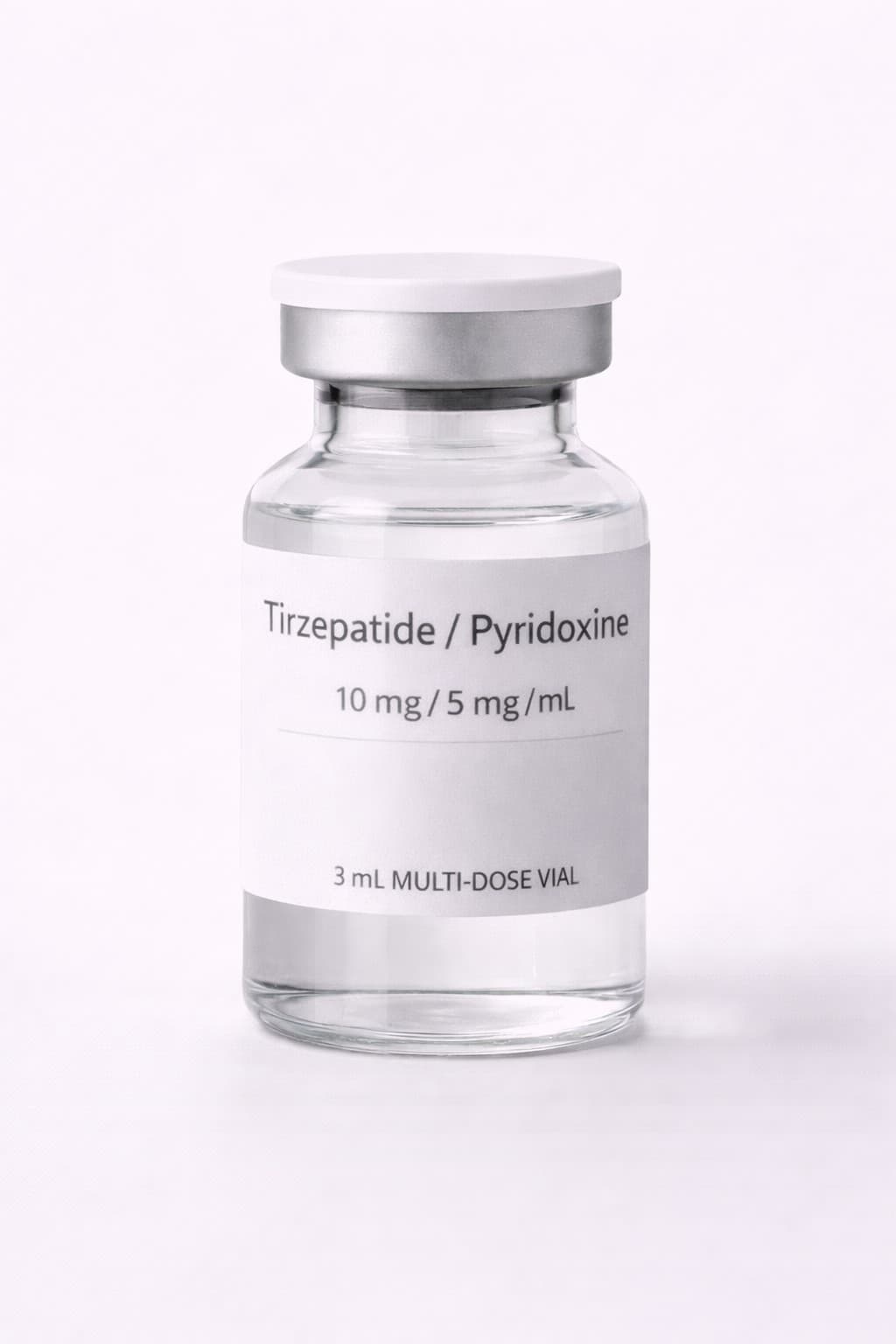
Tirzepatide / Pyridoxine is a combination injectable formulation designed to support metabolic health, weight management, and energy balance. Tirzepatide is a dual glucose-dependent insulinotropic polypeptide (GIP) and glucagon-like peptide-1 (GLP-1) receptor agonist that plays a key role in appetite regulation, glycemic control, and metabolic signaling. Pyridoxine (Vitamin B-6) is included to support amino acid metabolism, neurotransmitter synthesis, and energy production. This multi-dose vial formulation allows for precise dosing and individualized titration under licensed medical supervision. The combination is commonly incorporated into comprehensive metabolic and weight management protocols where appetite control, insulin sensitivity, and metabolic efficiency are clinical priorities. Mechanism of Action: Tirzepatide: Activates GIP and GLP-1 receptors to regulate appetite, slow gastric emptying, and support glycemic control Enhances satiety signaling and reduces caloric intake Supports insulin sensitivity and metabolic efficiency Pyridoxine (Vitamin B-6): Supports protein and amino acid metabolism Contributes to neurotransmitter synthesis and nervous system function Plays a role in energy production and metabolic pathways Ideal For: Medically supervised weight management programs Patients seeking appetite regulation and metabolic optimization Support for insulin sensitivity and glycemic balance Weight loss protocols incorporating GLP-1–based therapies Comprehensive metabolic health programs Dosage & Protocols: Typical Subcutaneous Dose: Determined by provider based on clinical assessment and patient response Dosing is individualized and may be titrated gradually Administered according to provider-directed schedule Requires ongoing monitoring for efficacy and tolerance